Feasibility of Remote Biomechanical Monitoring Across the Menstrual Cycle Using DANU Smart Socks in Female Athletes: An Exploratory Longitudinal Study
Introduction
Women’s sports have seen remarkable global growth in participation, media visibility, and professional opportunities that continue to accelerate (Meyer, 2025). This rise is reflected at the elite level, with new competition formats like the Women’s Super League and Women’s Championship expansion, The Hundred cricket tournament, and Unrivaled basketball league (Sheridans Sport, 2025). Additionally, sponsorships from global brands and increasing private equity investment are driving higher valuations and long-term commercial growth in women's sport (Sheridans Sport, 2025). Despite the growth in participation and popularity in women’s sport, women are often underrepresented throughout the sport science literature compared to their male counterparts (Costello et al., 2014). An analysis of six sport and exercise science journals (2014-2020) found that females comprised only 34% of participants, with just 6% of studies conducted exclusively on females (Cowley et al., 2021). Consequently, many sport science practices, including nutritional advice and injury prevention strategies, are primarily based on research involving male athletes and may therefore be inappropriately applied to female athletes (Emmonds et al., 2019).
Women's physiology is distinct and primarily influenced by endogenous sex hormones such as oestrogen, progesterone, luteinizing hormone (LH) and follicle-stimulating hormone (FSH) that control the menstrual cycle as seen in Figure 1 (Mujika and Taipale, 2019). The menstrual cycle is a monthly physiological process that prepares the female body for ovulation and potential pregnancy (Thiyagarajan et al., 2024). These female-specific physiological factors, such as varying concentrations of female sex hormones during various stages of the menstrual cycle may be crucial to maximising female athletes' performance, reducing injury risk, and preserving their health (Carmichael et al., 2021).
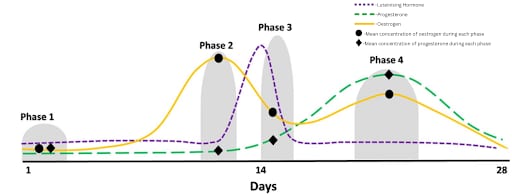
Figure 1. Changes in circulating hormone concentrations across the menstrual cycle (Adapted from Elliott-Sale et al., 2021)
The four stages of the menstrual cycle include (Kurpanik et al., 2024; Elliott-Sale et al., 2021):
Phase 1 - Menstruation
This phase is marked by low oestrogen and progesterone levels, beginning on the first day of bleeding and lasting about five days. The bleeding results from the shedding of the endometrium from the previous cycle and ends as oestrogen levels rise.
Phase 2 - Follicular
This phase occurs about 14-26 hours before ovulation, oestrogen peaks and progesterone rises slightly.
Phase 3 - Ovulation
This phase occurs mid-cycle, lasting 24-36 hours, this phase features peaks in LH and FSH that trigger follicle rupture and egg release.
Phase 4 - Luteal
This phase emerges about seven days after ovulation, progesterone peaks as the ruptured follicle becomes the corpus luteum, which supports potential pregnancy. If fertilisation doesn’t occur, the corpus luteum degenerates, progesterone drops, and menstruation begins (Rogan et al., 2023).
Despite the well-established monthly fluctuations in hormone concentrations during the menstrual cycle, a complete understanding of how these changes influence training, injury risk, and athletic performance remains difficult (Mujika and Taipale, 2019). Research indicates that female athletes commonly experience fluctuations in perceived physical performance, mood, and physical symptoms throughout the menstrual cycle (Paludo et al., 2022; Ekenros et al., 2022; Taim et al., 2024). For example, Hayward et al. (2024) reported that among 147 professional female rugby players, 87.8% perceived psychological effects, 83.7% experienced physical effects, 70.1% believed their performance was affected, and 51.7% suspected an increased injury risk during specific phases of their menstrual cycle. Despite these perceptions, the literature remains limited and inconsistent regarding whether menstrual cycle phase influences physical performance (García-Pinillos et al., 2021; Seddick et al., 2025), movement mechanics (Garcia, 2025; Elvan et al., 2024; Abt et al., 2007; Golden et al., 2025; Hrachovinová et al., 2023; Domínguez-Muñoz et al., 2024), or injury risk (Martínez-Fortuny et al., 2023; Bell et al., 2014; Adachi et al., 2008; Herzberg et al., 2017).
Movement strategies, including gait, balance, and jumping mechanics, provide objective measures of neuromuscular control and may offer valuable insight into how hormonal fluctuations influence movement and injury risk. Female athletes are reported to have a four- to six-fold greater risk of anterior cruciate ligament (ACL) injury than males participating in the same sports (Beynnon et al., 2014; Joseph et al., 2013; Raymond-Pope et al., 2021). Hormonal fluctuations have been proposed to influence ligament laxity, neuromuscular control, and movement mechanics, potentially increasing susceptibility to injury (Herzberg et al., 2017; Park et al., 2009; Bell et al., 2014). However, biomechanical evidence remains inconclusive and is largely derived from laboratory-based assessments, limiting its application in sporting environments. Consequently, there is a need for practical, field-based methods capable of monitoring movement strategies in real-world settings.
DANU Smart Socks are wearable technology that utilise a multi-modal sensor system to objectively assess gait, balance, and jumping performance, providing detailed biomechanical metrics outside of the laboratory (Mason et al., 2025). This technology offers the potential to remotely monitor movement strategies associated with lower limb performance and injury risk, making it well suited to investigate whether biomechanical adaptations occur across the menstrual cycle.
Therefore, the primary aim of this pilot aim was to describe within-individual variation in gait, jump, and balance assessments across menstrual cycle phases. A secondary aim was to determine the feasibility of repeated, unsupervised, remote biomechanical assessment across six consecutive menstrual cycles using the DANU System, indexed by session completion, data quality, and participant adherence.
Methods
Study Design
This exploratory longitudinal case study investigated whether biomechanical movement strategies could be detected across the four phases of the menstrual cycle using the DANU Smart Sock system during remote assessments. Data were collected over a six-month period, corresponding to six complete menstrual cycles, with participants completing biomechanical testing during each menstrual cycle phase. A total of 768 assessments were recorded. All participants signed a consent form before any testing took place.
Participants
Four recreationally active female athletes of varying sporting backgrounds participated in the study as seen in Table 1. Participants had regular menstrual cycles, defined as 11-12 menstrual periods within the previous 12 months, and reported no history of lower-limb injury during the study period. Menstrual cycle phase was identified using a menstrual cycle tracking application, with assessments completed during the menstrual, follicular, ovulatory, and luteal phases of each cycle.
Participant | Age Bracket | Typical cycle Length | Cycle status | Contraceptive status | Method of cycle tracking | Dominant limb | Exercise Type |
1 | 21-24 | 25-29 | Natural | Ballerine non-hormonal copper coil | Flo | Right | Field based athlete Pitch 3 times/week |
2 | 21-24 | 25-29 | Natural | None | Flo | Left | Hyrox athletes interval training 1 time /week strength training 2 times/week |
3 | 21-24 | 35+ | Natural | None | Flo | Right | Long Distance Runner - 40-60 km/week |
4 | 29-32 | 25-29 | Natural | None | FitrWoman | Right | Elite international level field based athlete Mix of field and strength based training 7 times per week |
Table 1. Descriptives of Participants
Experimental Protocol
Participants completed all assessments remotely while wearing the DANU Smart Socks. Testing was performed once during each menstrual cycle phase over six consecutive cycles. Each testing session consisted of gait, jumping, and balance assessments performed in a standardised order. Symptom tracking was also noted through their App (FitrWoman and Flo).
The gait assessment included:
A 30-second self-selected linear jogging trial
The athlete completes a 30-second self-selected linear jogging trial along a straight pathway at a comfortable, self-selected pace. Continuous jogging is maintained for the full 30 seconds.
A 15-m sprint followed by a deceleration
The athlete performs a 15-m sprint followed immediately by a controlled deceleration to a complete stop.
Jump performance consisted of:
Three double-leg drop jumps
The athlete stands on a box or platform, typically 20-30 cm high, with both feet positioned shoulder-width apart. They step off (rather than jump) the box, dropping to the ground and landing simultaneously on both feet. Upon landing, the athlete should immediately perform a maximal vertical jump using both legs, aiming to minimise ground contact time and maximise jump height. Following the jump, the athlete lands on both feet and stabilises under control before completing the trial.
Two single-leg drop jumps performed on each limb
The athlete stands on one leg on a box or platform, typically 20-30 cm high. They step off (not jump) the box and drop to the ground, landing on the same leg. Upon landing, the athlete should immediately perform a maximal vertical jump, still on the same leg, aiming to minimise ground contact time and maximise jump height. After the jump, the athlete lands again on the same leg, ideally under control.
Balance assessments included:
Y-Balance Test
The athlete stands one foot, maintaining balance on the stance leg; they reach as far as possible with the free leg in the anterior, posteromedial, and posterolateral directions before returning to the starting position under control. This repeated on the opposite limb.
Thirty-second single-leg stance with eyes open and eyes closed
The athlete lifts one foot off the ground and balances on the other leg, keeping the body upright and as still as possible. The arms are usually kept on the hips, and the non-stance leg is held slightly off the floor without touching the standing leg. This position is held for 30 seconds.
Symptom Analysis
Symptoms are tracked throughout each menstrual cycle phase using the FitrWoman or Flo app, with participants recording phase-specific symptoms and menstrual cycle information.
Biomechanical Measurements
All biomechanical data were collected using the DANU Smart Sock system, a wearable inertial sensor platform designed to quantify lower-limb movement in field-based environments.
For gait tasks, spatiotemporal and biomechanical variables included peak tibial acceleration, gait velocity, stride length, step length, contact time, flight time, swing time, cadence, stride frequency, swing ratio, stance ratio, duty factor, drive index, maximum and mean stride velocity, gait line length, gait line width, and double support time.
Jump performance variables included jump height, flight time, contact time, reactive strength index (RSI), modified reactive strength index (mRSI), and peak power.
Balance outcomes included ellipse area, ellipse length, ellipse width, mediolateral and anteroposterior range, total displacement, relative displacement, mediolateral/anteroposterior and mean sway velocity, sway area per second, fractal dimension, and stability score.
Statistical Analysis
As this was an exploratory pilot study with repeated measurements obtained across six menstrual cycles, descriptive statistics were calculated for all variables within each menstrual cycle phase. Linear mixed-effects models were used to examine the effect of menstrual cycle phase on biomechanical outcomes while accounting for repeated observations within participants. Where significant main effects were identified, post-hoc pairwise comparisons with appropriate adjustment for multiple comparisons were performed. Statistical significance was accepted at p < 0.05.
Results
Group Level Analysis
At the group level, as seen in Table 2, a potential phase-dependent trend was observed across movement tasks, with the menstrual phase generally characterised by lower performance outcomes and increased variability, while the ovulatory phase demonstrated the most favourable performance profile. The follicular and luteal phases displayed intermediate responses. Given the variability in individual responses and the influence of one participant on several significant findings, individual-level analyses were subsequently performed to further examine phase-specific adaptations (see Section on Individual Analysis).
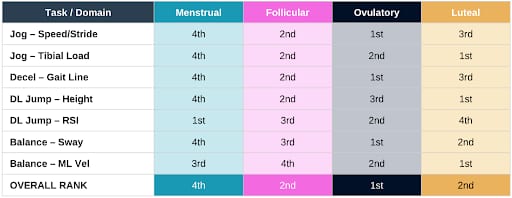
Table 2. Overall ranking of menstrual cycle phase performance across gait, jump, and balance domains.
Symptom Analysis
Negative symptoms predominated during the menstrual (89.1%), ovulatory (57.9%), and luteal (83.8%) phases, whereas the follicular phase was characterised exclusively by positive symptoms (100%) (Figure 2).
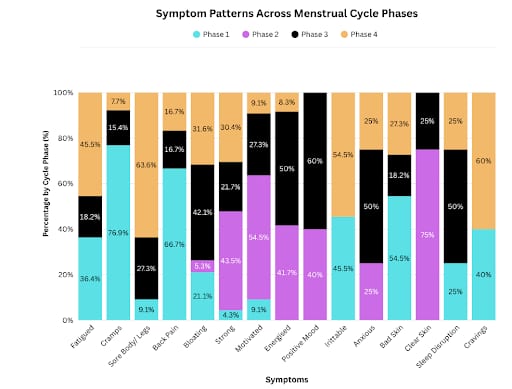
Figure 2. Symptom patterns across the menstrual cycle phases.
Individual Analysis
Participant 1
Significant differences across menstrual cycle phases were identified in deceleration variables, including flight time (p = 0.005), swing time (p = 0.035), swing ratio (p = 0.013), stance ratio (p = 0.013), duty factor (p = 0.013), and peak acceleration (p = 0.003). Significant phase effects were also observed during jogging for step time (p = 0.031), maximum stride velocity (p = 0.019), mean stride velocity (p = 0.019), stride length (p = 0.034), step length (p = 0.034), gait velocity (p = 0.027), and peak acceleration (p = 0.014). Double-leg drop jump performance differed significantly across phases for flight time, jump height, and peak power (all p = 0.011). Significant effects were also observed for Y-Balance relative displacement (p = 0.041) and daily left limb load (p = 0.043) (See Figure 3).
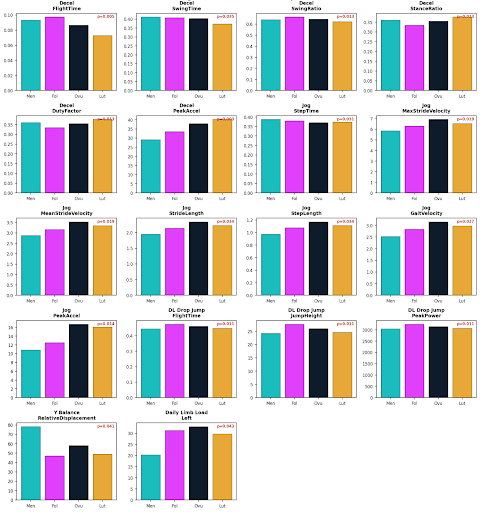
Figure 3. Metrics demonstrating significant changes across the menstrual cycle in Participant 1
Participant 2
For Participant 2, significant differences across menstrual cycle phases were identified during deceleration for contact time (p = 0.028) and length of gait line (p = 0.008) (Figure 4).
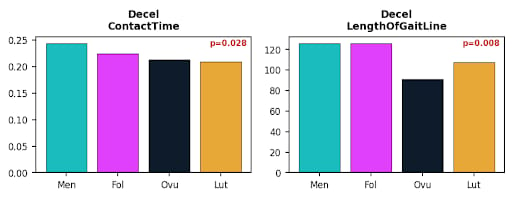
Figure 4. Metrics demonstrating significant changes across the menstrual cycle in Participant 2
Participant 3
For Participant 3, a significant difference across menstrual cycle phases was identified during deceleration for width of gait line (p = 0.05) (Figure 5).
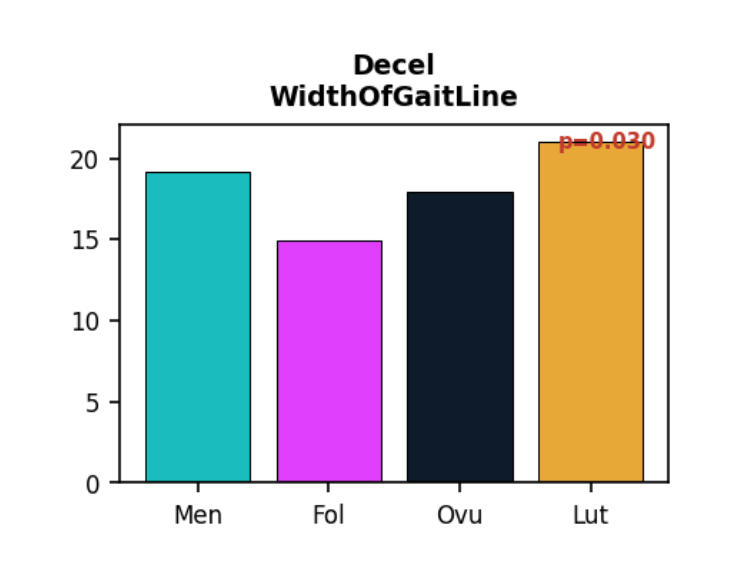
Figure 5. Metrics demonstrating significant changes across the menstrual cycle in Participant 3.
Participant 4
For Participant 4, no significant differences were identified for any metric across the menstrual cycle for this athlete.
Discussion & Conclusion
The primary aim of this pilot aim was to describe within-individual variation in gait, jump, and balance assessments across menstrual cycle phases. A secondary aim was to determine the feasibility of repeated, unsupervised, remote biomechanical assessment across six consecutive menstrual cycles using the DANU System, indexed by session completion, data quality, and participant adherence. The findings provide preliminary evidence that wearable technology (DANU) may be capable of detecting phase-related changes in movement mechanics while also demonstrating considerable inter-individual variability. This is important given that existing research investigating the influence of the menstrual cycle on physical performance and movement mechanics remains limited and inconsistent.
A key finding of this study was the feasibility of using DANU as a remote data collection tool for longitudinal movement analysis. Participants completed repeated biomechanical assessments over a six-month period, with 768 assessments recorded across the study. Testing included gait, jumping and balance assessments, demonstrating that a relatively extensive biomechanical testing battery could be completed outside of a laboratory environment. This is particularly relevant to female athlete research, where laboratory-based biomechanical assessments can be resource intensive and difficult to implement repeatedly throughout multiple menstrual cycles. The ability to collect repeated movement data remotely may therefore provide a more practical approach for investigating longitudinal changes in female athletes.
The results also demonstrated phase-dependent differences in biomechanical variables, although these were not consistent across all participants. At the group level, a potential trend was observed across the movement tasks, with the menstrual phase generally demonstrating lower performance outcomes and greater variability, while the ovulatory phase demonstrated a more favourable performance profile. However, the variability in individual responses resulted in individual-level analysis being required. At the individual level, Participant 1 demonstrated significant differences across a relatively large number of gait, deceleration, jumping and balance variables, while Participants 2 and 3 demonstrated fewer significant differences. Participant 4 demonstrated no significant differences across any of the measured variables.
This variation between participants is an important finding and supports the concept that responses to the menstrual cycle may be individual rather than universal. Previous literature has similarly reported inconsistent findings regarding the effects of menstrual cycle phase on physical performance (García-Pinillos et al., 2021; Seddick et al., 2025), movement mechanics (Garcia, 2025; Elvan et al., 2024; Abt et al., 2007; Golden et al., 2025; Hrachovinová et al., 2023; Domínguez-Muñoz et al., 2024), and injury risk (Martínez-Fortuny et al., 2023; Bell et al., 2014; Adachi et al., 2008; Herzberg et al., 2017). Meignié et al. (2021) similarly reported that menstrual cycle-related effects on performance in elite athletes remain inconclusive. This variability may reflect individual characteristics, with Participant 4, an international-level athlete with high training volume and regular strength training, showing no significant differences compared with multiple phase-dependent changes in Participant 1, who did not undertake strength training. Although causality cannot be established, these findings highlight the potential influence of training status on individual responses.
Therefore, the absence of significant changes in some participants should not necessarily be interpreted as evidence that the menstrual cycle has no influence on movement. Instead, it may indicate that the magnitude and nature of any biomechanical response differs between individuals. This has potential implications for applied practice, as a standardised approach assuming that all athletes will experience the same biomechanical changes during a particular menstrual cycle phase may not be appropriate. Individual monitoring may provide a more meaningful approach for identifying changes in an athlete's own movement patterns.
An additional finding of the pilot was the identification of movement patterns beyond the original research questions. Self-selected jogging velocity appeared to vary alongside symptom patterns across the menstrual cycle, with participants tending to select a slower jogging pace during the menstrual and luteal phases, which were characterised by a higher proportion of negative symptoms, compared with the follicular and ovulatory phases.
Limitations and Future Research Considerations
While this was a pilot study, several methodological considerations should be addressed before these findings can be interpreted more broadly. Standardisation of the testing protocol is particularly important. The jogging assessment was performed at a self-selected pace, meaning that running velocity could vary both between participants and between testing sessions. Consequently, some observed changes in gait variables may reflect differences in running speed rather than menstrual cycle phase itself.
Future research should consider controlling running velocity or incorporating velocity into the analysis to reduce this potential source of variability. Similarly, the Y-Balance assessment would benefit from greater standardisation in future research. Although participants performed anterior, posteromedial and posterolateral reaches, standardised reach distances should be incorporated to improve comparability between participants and testing sessions. Additionally, the method of menstrual cycle phase identification is another important consideration. In the current study, the menstrual cycle phase was identified using menstrual cycle tracking applications. Although menstrual tracking through an application provides a practical method for remote research, future studies could improve phase classification through the incorporation of physiological biomarkers or ovulation testing.
The small sample size is also an important limitation. Only four participants completed the study, and they represented different sporting backgrounds and activity levels. While the longitudinal design provided a substantial number of repeated measurements, the number of individuals remains insufficient to determine whether the observed patterns are representative of female athletes more broadly. A larger sample would allow individual responses to be examined alongside group-level trends and would provide greater statistical power to investigate potential interactions between menstrual cycle phase and biomechanical outcomes. Finally, the inclusion of control groups, including male participants and females using hormonal contraception, could also provide greater insight into whether observed changes are associated specifically with endogenous hormonal fluctuations. Future research should also investigate whether training volume, competitive level and strength-training exposure contribute to the individual differences observed in biomechanical responses.
Overall, this pilot study provides preliminary evidence that DANU Smart Socks can be used as a feasible remote tool to monitor biomechanical changes across the menstrual cycle. Phase-related differences were identified across movement tasks, although responses varied considerably between athletes, suggesting that menstrual cycle-related changes may be highly individualised. These findings support the potential for DANU to enable longitudinal monitoring of movement in female athletes and provide a foundation for larger, more standardised studies investigating the relationship between menstrual cycle phase and movement mechanics.
Bibliography
[1] | Abt, J.P., Sell, T.C., Laudner, K.G., McCrory, J.L., Loucks, T.L., Berga, S.L. and Lephart, S.M., 2007. Neuromuscular and biomechanical characteristics do not vary across the menstrual cycle. Knee Surgery, Sports Traumatology, Arthroscopy, 15(7), pp.901-907. |
[2] | Adachi, N., Nawata, K., Maeta, M. and Kurozawa, Y., 2008. Relationship of the menstrual cycle phase to anterior cruciate ligament injuries in teenaged female athletes. Archives of orthopaedic and trauma surgery, 128(5), pp.473-478. |
[3] | Bell, D.R., Blackburn, J.T., Hackney, A.C., Marshall, S.W., Beutler, A.I. and Padua, D.A., 2014. Jump-landing biomechanics and knee-laxity change across the menstrual cycle in women with anterior cruciate ligament reconstruction. Journal of athletic training, 49(2), pp.154-162. |
[4] | Carmichael, M.A., Thomson, R.L., Moran, L.J. and Wycherley, T.P., 2021. The impact of menstrual cycle phase on athletes’ performance: a narrative review. International journal of environmental research and public health, 18(4), p.1667. |
[5] | Costello, J.T., Bieuzen, F. and Bleakley, C.M., 2014. Where are all the female participants in Sports and Exercise Medicine research?. European journal of sport science, 14(8), pp.847-851. |
[6] | Domínguez-Muñoz, C., del Campo, J., García, A., Guzmán, J., Martínez-Gallego, R. and Ramón-Llin, J., 2024. Analysis of Kinematic Variables According to Menstrual Cycle Phase and Running Intensity: Implications for Training Female Athletes. Applied Sciences, 14(12), p.5348. |
[7] | Ekenros, L., von Rosen, P., Solli, G.S., Sandbakk, Ø., Holmberg, H.C., Hirschberg, A.L. and Fridén, C., 2022. Perceived impact of the menstrual cycle and hormonal contraceptives on physical exercise and performance in 1,086 athletes from 57 sports. Frontiers in physiology, 13, p.954760. |
[8] | Elvan, A., Kirişçi, S., Başer Seçer, M., Çeliker Tosun, Ö. and Tosun, G., 2024. Does Phase of the Menstrual Cycle Affect Balance and Postural Control?. Journal of Motor Behavior, 56(1), pp.69-77. |
[9] |
|
[10] | García-Pinillos, F., Bujalance-Moreno, P., Lago-Fuentes, C., Ruiz-Alias, S.A., Domínguez-Azpíroz, I., Mecías-Calvo, M. and Ramirez-Campillo, R., 2021. Effects of the menstrual cycle on jumping, sprinting and force-velocity profiling in resistance-trained women: a preliminary study. International Journal of Environmental Research and Public Health, 18(9), p.4830. |
[11] | Garcia, J., 2025. Menstrual Cycle Variations in Ultrasound and Biomechanical Risk Factors for ACL Injury in Adolescent Female Athletes. |
[12] | Golden, D., Moore, E.M., Weltman, A., Statuta, S. and Hertel, J., 2025. GAIT BIOMECHANICS AMONG FEMALE ENDURANCE RUNNERS: COMPARING DAYS WITH OR WITHOUT MENSTRUAL CYCLE-RELATED SYMPTOMS. Journal of Athletic Training. |
[13] | Hayward, E., Akam, L., Hunter, D. and Mastana, S., 2024. Role of the menstrual cycle on performance and injury risk: a survey of female professional rugby players in the United Kingdom. International journal of environmental research and public health, 21(2), p.150. |
[14] | Herzberg, S.D., Motu’apuaka, M.L., Lambert, W., Fu, R., Brady, J. and Guise, J.M., 2017. The effect of menstrual cycle and contraceptives on ACL injuries and laxity: a systematic review and meta-analysis. Orthopaedic journal of sports medicine, 5(7), p.2325967117718781. |
[15] | Hrachovinová, S., Klein, T. and Svoboda, Z., 2023, September. Gait in different phases of the menstrual cycle. In 9th International Posture Symposium Smolenice Castle, Slovakia (p. 83). |
[16] | Kurpanik, M., Grzybowska, M., Krupa-Kotara, K., Barylska, K., Juraszek, P. and Grajek, M.K., 2024. The impact of the menstrual cycle on emotions and behavior—A review of current research. Applied Psychology Research, 3(2), pp.1432-1432. |
[17] | Martínez-Fortuny, N., Alonso-Calvete, A., Da Cuña-Carrera, I. and Abalo-Núñez, R., 2023. Menstrual cycle and sport injuries: a systematic review. International journal of environmental research and public health, 20(4), p.3264. |
[18] | Elliott-Sale, K.J., Minahan, C.L., de Jonge, X.A.J., Ackerman, K.E., Sipilä, S., Constantini, N.W., Lebrun, C.M. and Hackney, A.C., 2021. Methodological Considerations for Studies in Sport and Exercise Science with Women as Participants: A Working Guide for Standards of Practice for Research on Women: KJ Elliott‑Sale et al. Sports Medicine, 51(5), pp.843-861. |
[19] | Meyer, T., 2025. Injury Prevention in Women’s Team Sports (Call for Papers). Journal of Science and Medicine in Sport, 28(8), pp.603-604. |
[20] | Mujika, I. and Taipale, R.S., 2019. Sport science on women, women in sport science. International journal of sports physiology and performance, 14(8), pp.1013-1014. |
[21] | Paludo, A.C., Paravlic, A., Dvořáková, K. and Gimunova, M., 2022. The effect of menstrual cycle on perceptual responses in athletes: a systematic review with meta-analysis. Frontiers in Psychology, 13, p.926854. |
[22] | Pucci, M. and Günther, E., 2018. The Ovarian Cycle. Available at: https://helloclue.com/articles/cycle-a-z/the-menstrual-cycle-more-than-just-the-period. |
[23] | Rogan, M.M. and Black, K.E., 2023. Dietary energy intake across the menstrual cycle: a narrative review. Nutrition reviews, 81(7), pp.869-886. |
[24] | Seddik, M., Bouzourraa, M.M., Ceylan, H.İ., Hamaidi, J., Ghouili, H., Chtourou, H., Guelmami, N., Dergaa, I., Muntean, R.I. and Souissi, N., 2025. The effect of time of day and menstrual cycle on physical performance and psychological responses in elite female Tunisian volleyball players. BMC Sports Science, Medicine and Rehabilitation, 17(1), p.67. |
[25] | Taim, B.C., Lye, J., Suppiah, H.T., Chan, T.W., Chia, M. and Clarke, A., 2024. Menstrual cycle characteristics, perceived impact on performance, and barriers to communication: Perspectives of high‐performance adolescent athletes in Singapore. Scandinavian Journal of Medicine & Science in Sports, 34(1), p.e14488. |
[26] | Thiyagarajan, D.K., Basit, H. and Jeanmonod, R., 2024. Physiology, menstrual cycle. In StatPearls [Internet]. StatPearls Publishing |
[27] | Sheridans Sport., 2025. A New Frontier for Women’s Sport? Key trends driving growth in 2025. [online] Substack.com. Available at: https://sheridanssport.substack.com/p/a-new-frontier-for-womens-sport-key [Accessed 29 Dec. 2025]. |
[28] | Beynnon, B.D., Vacek, P.M., Newell, M.K., Tourville, T.W., Smith, H.C., Shultz, S.J., Slauterbeck, J.R. and Johnson, R.J., 2014. The effects of level of competition, sport, and sex on the incidence of first-time noncontact anterior cruciate ligament injury. The American journal of sports medicine, 42(8), pp.1806-1812. |
[29] | Joseph, A.M., Collins, C.L., Henke, N.M., Yard, E.E., Fields, S.K. and Comstock, R.D., 2013. A multisport epidemiologic comparison of anterior cruciate ligament injuries in high school athletics. Journal of athletic training, 48(6), pp.810-817. |
[30] | Raymond-Pope, C.J., Dengel, D.R., Fitzgerald, J.S., Nelson, B.J. and Bosch, T.A., 2021. Anterior cruciate ligament reconstructed female athletes exhibit relative muscle dysfunction after return to sport. International journal of sports medicine, 42(04), pp.336-343. |
[31] | Piussi, R., 2024. Psychological outcomes during rehabilitation after ACL reconstruction-and implications for second ACL injury. |
[32] | Padua, D.A., DiStefano, L.J., Beutler, A.I., De La Motte, S.J., DiStefano, M.J. and Marshall, S.W., 2015. The landing error scoring system as a screening tool for an anterior cruciate ligament injury–prevention program in elite-youth soccer athletes. Journal of athletic training, 50(6), pp.589-595. |
[33] | Mason, R., Barry, G., Vitorio, R., Lennon, O., Robinson, H., O’Callaghan, B., Morris, R., Godfrey, A. and Stuart, S., 2025. Smart clothing for human movement analysis: future application in sport and clinical practice. Expert Review of Medical Devices, 22(2), pp.111-116. |
[34] | Park, S.K., Stefanyshyn, D.J., Ramage, B., Hart, D.A. and Ronsky, J.L., 2009. Relationship between knee joint laxity and knee joint mechanics during the menstrual cycle. British journal of sports medicine, 43(3), pp.174-179. |
[35] | Parsons, J.L., Coen, S.E. and Bekker, S., 2021. Anterior cruciate ligament injury: towards a gendered environmental approach. British journal of sports medicine, 55(17), pp.984-990. |
[36] | Cowley, E.S., Olenick, A.A., McNulty, K.L. and Ross, E.Z., 2021. “Invisible sportswomen”: the sex data gap in sport and exercise science research. Women in Sport and Physical Activity Journal, 29(2), pp.146-151. |
[37] | Pellegrino, A., Tiidus, P.M. and Vandenboom, R., 2022. Mechanisms of estrogen influence on skeletal muscle: mass, regeneration, and mitochondrial function. Sports Medicine, 52(12), pp.2853-2869. |
[38] | Somerson, J.S., Isby, I.J., Hagen, M.S., Kweon, C.Y. and Gee, A.O., 2019. The menstrual cycle may affect anterior knee laxity and the rate of anterior cruciate ligament rupture: a systematic review and meta-analysis. JBJS reviews, 7(9), p.e2. |
[39] | Bendis, P.C., Zimmerman, S., Onisiforou, A., Zanos, P. and Georgiou, P., 2024. The impact of estradiol on serotonin, glutamate, and dopamine systems. Frontiers in neuroscience, 18, p.1348551. |
[40] | Szatmáry, R. and Sápi, J., 2025. Understanding female hormones: a guide to their complexity and everyday impact. |
[41] | Meignié, A., Duclos, M., Carling, C., Orhant, E., Provost, P., Toussaint, J.F. and Antero, J., 2021. The effects of menstrual cycle phase on elite athlete performance: a critical and systematic review. Frontiers in physiology, 12, p.654585. |